If you have been priced out of the idea of a single-family home in Somerville, a live-in triple-decker may open a different path. Instead of buying just a place to live, you may be buying a home with built-in rental income potential in one of Greater Boston’s most established multi-family markets. If you are weighing that option, this guide will help you understand why the strategy fits Somerville, what numbers matter, and where the real risks live. Let’s dive in.
Why Somerville Triple-Deckers Stand Out
Somerville did not invent the triple-decker, but the building type is deeply tied to the city’s housing fabric. City planning documents treat triple-deckers as a core part of Somerville housing, and Massachusetts Clean Energy Center describes them as one of the state’s most common residential forms.
That matters because a live-in triple-decker is not some unusual workaround. In Somerville, it is a long-established ownership model where you live in one unit and rent the others. In a high-cost market, that setup can make ownership more realistic than buying a condo or single-unit home on its own.
Zillow reported Somerville’s average home value at $914,966 as of February 28, 2026, up 0.8% year over year. Homes were going pending in about 32 days, which points to steady demand. On the rental side, Zillow’s market summary showed an average rent of $3,800 and 2,174 available rentals as of May 5, 2026.
What a Somerville Triple-Decker Usually Looks Like
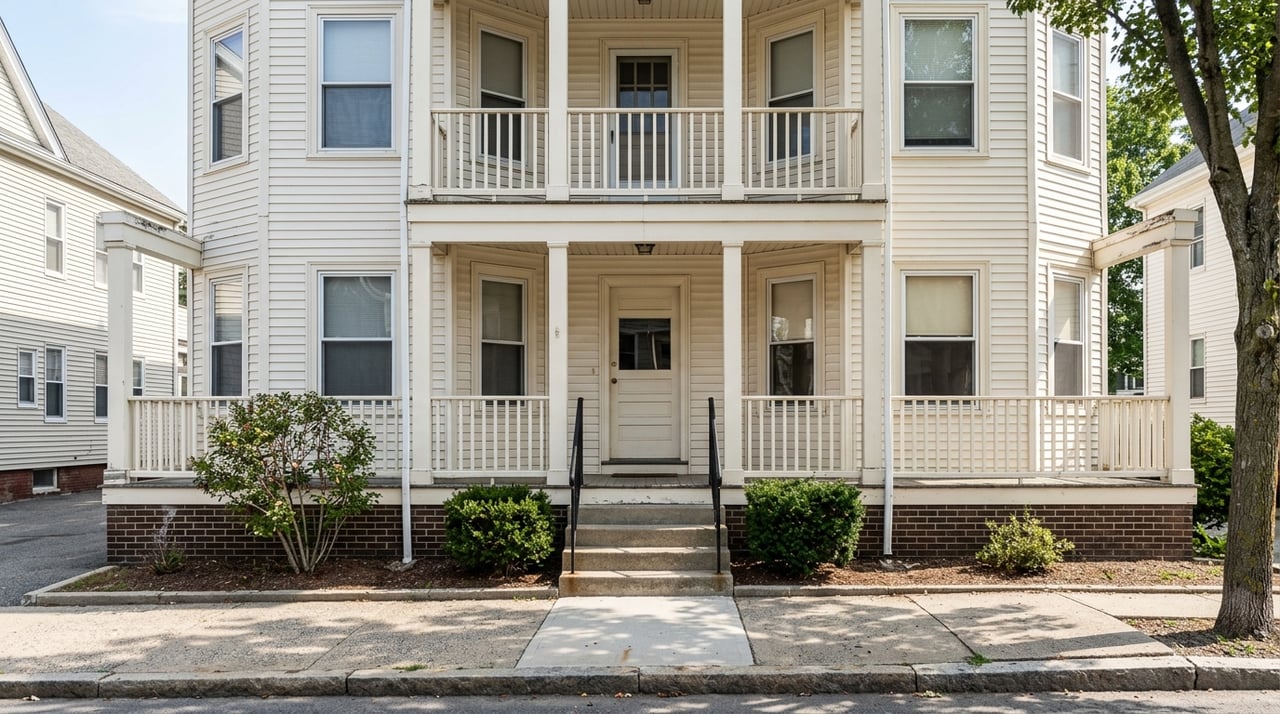
A classic triple-decker is typically a three-story wood-framed building with three apartments stacked one above another. Massachusetts Clean Energy Center notes that these homes generally have similar floor plans across units, and Somerville review records show examples with features like 3-bedroom layouts, bays, and three-floor porches.
For you as a buyer, that similarity can be useful. If one unit will be owner-occupied and the other two are rentals, near-matching layouts can make rent comparisons more straightforward. It can also make renovation planning a little more predictable when systems, finishes, or room counts are similar across floors.
Many of these properties were built in the late 19th or early 20th century. That age is part of the appeal, but it also creates real operating costs. MassCEC notes that triple-deckers are often energy inefficient and may need weatherization or system upgrades.
Why the Live-In Strategy Can Work
The main appeal is simple: rental income from the other units may help offset your ownership costs. In a city with high rents, that can change the math in a meaningful way.
Zillow’s current rental data shows typical asking rents around $4,103 for 2-bedroom units and $5,293 for 3-bedroom units in Somerville. Recent listing snapshots also showed 2-bedroom rentals from roughly $3,000 to $4,500 and 3-bedroom rentals from about $3,600 to over $5,000, depending on condition and location.
Using only current averages as a rough illustration, two rented 2-bedroom units would gross about $8,206 per month. Two rented 3-bedroom units would gross about $10,586 per month. That is not a promise for any specific building, but it shows why many buyers seriously consider this strategy.
The key is to think of a live-in triple-decker as a home purchase and a small landlord purchase at the same time. The upside can be real, but so are the expenses, responsibilities, and compliance requirements.
Financing Questions to Ask Early
One of the biggest advantages of a live-in multi-family purchase is that owner-occupant financing may be available. That can put a 2- to 4-unit property within reach for buyers who might assume only investors can buy this kind of asset.
HUD states that FHA loans can be used for 1- to 4-unit properties, with down payments as low as 3.5%. For some buyers, that makes FHA an early option worth comparing against condo financing or conventional loans.
Conventional low-down-payment programs may also apply. Fannie Mae’s HomeReady and Freddie Mac’s Home Possible both support eligible owner-occupied 2- to 4-unit primary residences, with down payments as low as 3% for qualified borrowers.
You should also budget for more than just the down payment. Fannie Mae says closing costs commonly run about 2% to 5% of the purchase price. Freddie Mac notes that borrowers putting down less than 20% on conventional financing generally pay private mortgage insurance.
How Rental Income May Help You Qualify
For many buyers, the most important lender conversation is not just about the loan product. It is about how much projected rent from the other units will count toward qualification.
Fannie Mae guidance says that for a 2- to 4-unit principal residence, the proposed monthly housing payment is included in total expenses, and net rental income can be added to qualifying income. In plain terms, future rent may help support your approval, but lenders will usually have specific rules around documentation, reserves, appraisal support, and how much of that rent they will recognize.
This is why you want to ask detailed questions early, such as:
- How much projected rent can be used in underwriting?
- Will the lender require current leases or market rent from the appraisal?
- How many months of reserves are required?
- What down payment options apply to a 3-unit property?
- How will taxes, insurance, and expected maintenance affect the approval?
In Middlesex County, the 2026 conforming loan limits were $962,550 for 1 unit, $1,232,250 for 2 units, $1,489,500 for 3 units, and $1,851,100 for 4 units, according to FHFA. That gives live-in multi-family buyers more room than a typical 1-unit conforming limit would.
Costs Buyers Should Not Ignore
The mistake many buyers make is focusing only on mortgage math. Older multi-family buildings can need capital improvements, and those costs can quickly change the picture.
A practical budget should include:
- Down payment
- Closing costs
- Property taxes and insurance
- Utilities not paid by tenants
- Repairs and maintenance
- Weatherization or system upgrades
- Vacancy and turnover costs
- Lead compliance costs where applicable
Massachusetts lead law is especially important in older housing stock. Homes built before 1978 may contain lead, and sellers and landlords must notify buyers and tenants of lead risks. The law also requires removal or control of lead paint hazards when children under 6 live in the home.
That means lead is not just a disclosure issue. It can be a legal and financial planning issue from day one. If you are buying an older Somerville triple-decker, it belongs in your due diligence and budget review.
Somerville Rules to Check Before You Buy
Not every triple-decker purchase is just about price and rent. Local rules can affect what changes you can make and what your long-term options may be.
If you are planning major exterior work or considering demolition, check whether the property falls under Somerville’s Historic District Ordinance or Demolition Review Ordinance. The Historic Preservation Commission oversees these rules.
If your exit strategy includes converting units to condominiums later, Somerville has a formal condominium-conversion process. The Condominium Review Board enforces conversion permits and tenant protections, and the city notes that ordinance amendments took effect on October 1, 2025.
This is one reason to think beyond the purchase itself. A strong live-in strategy looks at acquisition, operations, future repairs, tenant planning, and eventual resale or conversion paths before you make an offer.
A Simple Way to Underwrite the Opportunity
You do not need to build a Wall Street model to evaluate a live-in triple-decker. You do need a realistic one.
Start with the expected monthly payment, including principal, interest, taxes, insurance, and any mortgage insurance. Then compare that number against likely rent from the non-owner units using current comparable rentals, not best-case assumptions.
After that, subtract a healthy allowance for repairs, vacancy, turnover, and older-building surprises. If the deal still feels manageable under conservative assumptions, you may have a property worth pursuing.
A strong underwriting review usually includes:
- Unit-by-unit rent estimates based on current market evidence
- A repair and upgrade checklist
- Utility and systems review
- Lead and compliance review
- Financing scenarios with different down payments
- A realistic hold plan for at least several years
Who This Strategy Fits Best
A live-in Somerville triple-decker can be a strong fit if you want to build equity while keeping one foot in owner-occupied financing. It can also fit buyers who are comfortable taking on the responsibilities of a small landlord in exchange for income potential and long-term flexibility.
It may be less appealing if you want a low-maintenance ownership experience or do not have the cash reserves for repairs in an older building. Triple-deckers can be powerful assets, but they usually reward buyers who plan conservatively and think long term.
In Somerville, the case for this strategy is grounded in the local market itself. Triple-deckers are part of the city’s housing identity, rents remain strong, and financing support exists for owner-occupants. The opportunity is real, but so is the need for careful analysis.
If you want help comparing a condo purchase against a live-in multi-family strategy, or you want to underwrite a specific Somerville property with a clear local lens, Prime Realty can help you evaluate the numbers, the building, and the long-term plan with confidence.
FAQs
What is a live-in triple-decker strategy in Somerville?
- It means you buy a three-family property, live in one unit as your primary residence, and rent out the other one or two units to help offset ownership costs.
Are Somerville triple-deckers common?
- Yes. Somerville planning documents and Massachusetts Clean Energy Center both treat triple-deckers as a well-established part of the local and statewide housing stock.
Can rental income help you qualify for a Somerville triple-decker mortgage?
- It may. Fannie Mae guidance says net rental income can be added to qualifying income for a 2- to 4-unit principal residence, subject to lender rules and documentation requirements.
What are average rents for Somerville multi-family units?
- Zillow reported an average rent of $3,800 across all bed counts, with typical asking rents around $4,103 for 2-bedroom units and $5,293 for 3-bedroom units in current market data.
What extra costs should buyers expect with older Somerville triple-deckers?
- Buyers should plan for repairs, maintenance, possible weatherization or systems upgrades, insurance, vacancy costs, and potential lead compliance expenses in pre-1978 properties.
What local rules matter before buying a triple-decker in Somerville?
- You should check for historic district or demolition review issues if changes are planned, and review Somerville’s condominium-conversion rules if a future condo exit is part of your strategy.