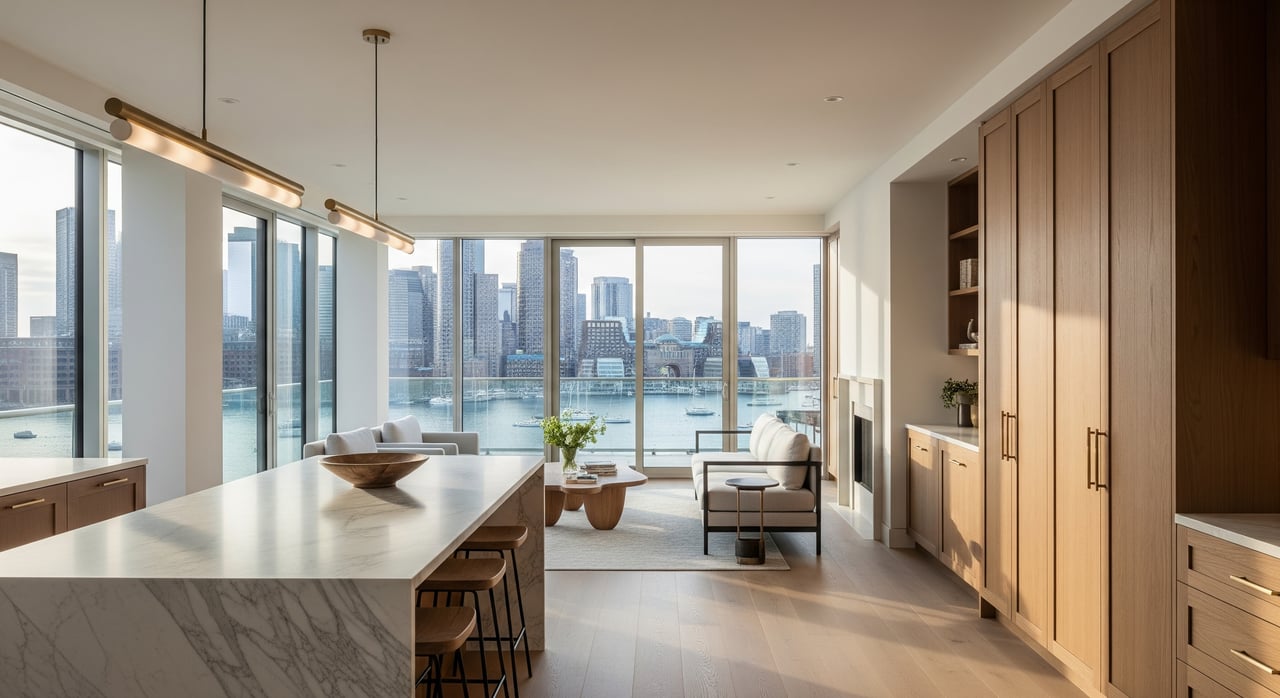
If you price a Seaport condo even slightly off, you risk leaving serious money on the table or sitting on the market while newer listings steal attention. You want a number that attracts real buyers, reflects real value, and sets you up to negotiate from strength. In this guide, you’ll learn how pricing actually works in Boston’s Seaport District, which factors move the needle, and a clear process to land on a number you can defend. Let’s dive in.
Know the Seaport market
The Seaport District is one of Boston’s most active luxury condo hubs. Waterfront proximity, new construction towers, and access to downtown drive steady demand. At the same time, new inventory and interest rate shifts can change buyer behavior fast. Your price has to reflect today’s market, not last season’s headlines.
Stay plugged into credible sources. For development trends and neighborhood planning, review the BPDA’s planning resources. For broader business and real estate context, track Boston Globe real estate coverage and Bisnow Boston market news.
Key dynamics to watch
- Inventory and months of supply at your price tier.
- Recent sale prices, list-to-sale ratios, and days on market for your building and peers.
- New development closings or bulk releases that add competing inventory.
- Employment and corporate relocation trends across tech and life sciences nearby.
- Interest rates and jumbo loan availability that shape buyer pools.
- Seasonality, since spring and early fall often see stronger traffic.
How value is determined
Most luxury condo pricing uses the comparable sales approach. You and your agent will analyze recent closings, then adjust for differences in floor, view, condition, size, parking, and amenities. A second cross-check is price per usable square foot to make sure your number aligns with recent activity in your building and its peers.
Unit-level factors that move price
- Size and layout. Efficient floor plans with great storage often outperform larger but awkward layouts.
- Floor and exposure. Higher floors and unobstructed harbor or skyline views typically command premiums.
- Condition and finishes. Updated kitchens, baths, and systems support higher pricing.
- Outdoor space. Balconies and terraces add real value.
- Parking and storage. Deeded garage parking and storage rooms are high-value in Seaport.
Building-level factors that matter
- Brand and amenities. Full-service buildings with concierge, fitness, and resident spaces usually trade at a premium.
- Financial health. Strong reserves and a limited history of special assessments are positives.
- Policies and management. Clear rental rules, responsive on-site management, and organized HOAs broaden the buyer pool.
Financial variables buyers weigh
- HOA dues and property taxes, which affect monthly carrying costs.
- Pending or recent assessments that may reduce your effective value.
- Jumbo financing requirements and appraisal support at your price point.
Build a rock‑solid CMA
A Comparative Market Analysis gives you a defensible price. Follow a disciplined process and use verifiable sources where possible.
Pull closed sales in your building from the past 6 to 12 months, plus 3 to 6 months if the market is shifting. Confirm deeded data through the Suffolk Registry of Deeds.
Add active and pending listings in your building and immediate peers. These are your competition now.
Verify square footage, parking, storage, and outdoor space. Cross-check tax details in the City of Boston Assessing property database.
Adjust comps for view quality, floor height, finish level, layout efficiency, and exposure. Document each adjustment and why it applies.
Calculate a price per usable square foot range. Apply it to your unit as a cross-check against your adjusted comp analysis.
Measure market momentum. Review months of supply, average days on market, and list-to-sale ratios at your price band.
Test two price scenarios. One aimed to sell quickly by creating early competition, and one aspirational if your unit is truly unique and you are flexible on timing.
Choose your pricing strategy
Your list price is not only a number, it is a strategy. Pick the path that fits your timeline, risk tolerance, and unit’s strengths.
Market-near listing
Price at or slightly below fair market value to spark multiple showings and potential competing offers. This works best with limited inventory and solid demand.
Market-value listing
Price at a realistic estimate of value based on your CMA. This is common in a balanced market and signals confidence without chasing the ceiling.
Aspirational listing
Price above the comp-supported range to test the ceiling if the unit is exceptional and you can wait. Understand the risks: longer days on market and possible price reductions.
Graduated strategy
Launch competitively for the first marketing window, then adjust up if demand is overwhelming or refine down if traffic is soft. Early weeks matter. The longer a luxury listing lingers, the harder it can be to recapture urgency.
Prep and marketing for premium results
Smart preparation improves perceived value, which supports your target price.
High-impact pre-listing upgrades
- Fresh paint, lighting updates, and minor repairs to remove objections.
- Focused kitchen and primary bath updates, like hardware, counters, or appliances when needed.
- Flooring refinishing or replacement where wear shows.
- Service HVAC, windows, and plumbing. Keep maintenance records ready for buyers.
Presentation buyers expect at the top end
- Professional staging, full or partial, especially for vacant units.
- High-resolution photography, including twilight shots that capture views.
- Accurate floor plans with room dimensions and usable square footage.
- 3D tours and video walkthroughs to attract out-of-town and busy buyers.
- Private showings, broker previews, and discreet, invitation-only events.
Documents buyers expect
Gather documents up front to support your price and reduce friction during diligence.
HOA financials, recent budgets, and reserve studies.
Minutes noting any pending litigation or special assessments.
Parking and storage deeds or licenses, plus any easements.
Building rules and rental policies, including short-term rules if relevant.
Appliance manuals, warranties, and recent service records.
Any energy or sustainability certifications.
Timing your launch
Seasonality matters in Boston. Spring and early fall often deliver strong buyer traffic, while late December can be slower. That said, well-priced, well-presented listings can perform in any season if they outclass the competition. If a major new building plans a release that competes with your unit type, consider launching before that inventory hits.
A simple timeline that works:
- Weeks 1 to 2: Complete repairs, decluttering, and staging plan. Confirm CMA and pricing strategy.
- Weeks 3 to 4: Finalize marketing assets, including photos, floor plans, and 3D tour. Assemble disclosure documents.
- Weeks 5 to 6: Launch and front-load showings. Host a broker preview. Gather feedback and watch the data.
- Week 7 onward: Adjust strategy based on traffic, private showings, and buyer feedback.
Appraisal and financing reality
At higher price points, appraisals can trail contract prices. If your buyer uses a jumbo mortgage, their lender will look closely at very recent comps in your building and immediate peers. Prepare for appraisal gaps by discussing options in advance, such as buyer cash coverage or a small price concession if needed. Solid comp support, airtight documentation, and premium presentation all help.
Avoid common pricing pitfalls
- Overpricing against clean, recent comps, which often leads to sharper reductions later.
- Underestimating the impact of HOA dues or pending assessments on buyer affordability.
- Skimping on marketing assets in a segment where first impressions drive showings.
- Restrictive showing windows that limit access for qualified buyers.
- Incomplete disclosure of HOA issues, leading to renegotiations or cancellations.
What a strong listing package includes
A great listing package makes your price feel inevitable. At minimum, aim to include:
- A pre-listing CMA with 3 to 6 closed comps, 3 to 6 active or pending comps, a price-per-square-foot analysis, and a recommended list price with rationale.
- A buyer packet with high-res photos, floor plans, an amenity list, parking and storage details, and a summary of HOA documents.
- A clear marketing timeline and showing plan, including private appointments.
- Negotiation scenarios outlining best-case, expected, and conservative sale outcomes so you can make confident decisions.
How Prime Realty helps you price right
You deserve a pricing recommendation you can defend in any room. At Prime Realty, you get neighborhood-specific analysis for the Seaport, a full review of building comps and pending activity, and a documented pricing strategy tied to your goals. Our boutique team blends valuation expertise with premium marketing, property operations, and investor advisory, so your asset is positioned and supported from listing through closing.
Ready to price your Seaport condo with confidence? Schedule your free consult with Prime Realty and get a data-backed strategy tailored to your unit and building.
FAQs
How do I price a Seaport condo with harbor views?
- Start with recent sales in your building that share comparable view corridors, then adjust for floor height, exposure, finish level, and outdoor space. Use price per usable square foot as a cross-check and confirm deed details through the Suffolk Registry of Deeds.
Which documents should I gather before listing a Seaport luxury condo?
- Assemble HOA budgets and reserves, meeting minutes, any assessment notices, parking and storage deeds, building rules, warranties, and maintenance records. Buyers also expect accurate floor plans and a feature list.
How do HOA dues affect my condo’s list price in Boston’s Seaport?
- Higher dues can reduce a buyer’s monthly affordability, which can compress your effective price compared to similar units with lower dues. Price with dues in mind and explain value through amenities and building services.
When is the best time of year to list a Seaport condo?
- Spring and early fall often see strong activity, but the right price and premium presentation can perform year-round. Consider timing if a new building release will compete directly with your unit type.
What if my condo does not appraise at the contract price?
- Discuss appraisal gap options upfront. Solutions include buyer cash coverage, a targeted price adjustment, or lender alternatives. Strong comps, clean documentation, and polished marketing help support value.
Where can I verify tax and assessment details for a Boston condo?
- Use the City of Boston Assessing property database to review property records, then confirm closing details through the Suffolk Registry of Deeds.