Wondering why some Back Bay condos spark fast, premium interest while others sit longer than expected? In a neighborhood where buyers often compare architecture, light, layout, and lifestyle in a matter of seconds online, staging can shape that first impression in a big way. If you want to position your condo for stronger offers, a smart staging plan can help you highlight what buyers value most. Let’s dive in.
Why staging matters in Back Bay
Back Bay is a distinct condo market, and your presentation should reflect that. As of June 2026, there were 130 condos for sale in Back Bay, with a median listing price of $1.57 million and a typical market time of 52 days.
That means buyers have options, even in a very competitive market. Internal market intelligence also shows that many homes receive multiple offers, and some hot homes sell about 2% above list, so your condo needs to stand out for the right reasons.
Staging matters because it helps buyers picture how the home lives. In the 2025 Profile of Home Staging, 83% of buyers' agents said staging makes it easier for buyers to visualize the property as a future home.
It can also support stronger pricing and speed. In the same report, 29% of sellers' agents said staging increased the dollar value offered by 1% to 10%, and 49% said it reduced time on market.
Match the Back Bay setting
Back Bay is not a generic condo market. Boston identifies the neighborhood as a protected historic district and highlights well-known landmarks and streets such as Commonwealth Avenue, Newbury Street, Boylston Street, Trinity Church, the Prudential Center, and the Boston Public Library.
That local context matters when you stage. In many Back Bay homes, the goal is not to make the space feel trendy or overdesigned. It is to create a polished, edited look that complements the neighborhood's classic character.
If your condo has original details, tall windows, elegant moldings, or notable views, staging should support those features rather than compete with them. Buyers are often drawn to a sense of place, and Back Bay offers a strong one.
Focus on the rooms that drive interest
Not every room needs the same level of attention. The most commonly staged spaces are the living room, primary bedroom, dining room, and kitchen, and that priority makes sense for Back Bay condos where flow and functionality matter.
Stage the living room first
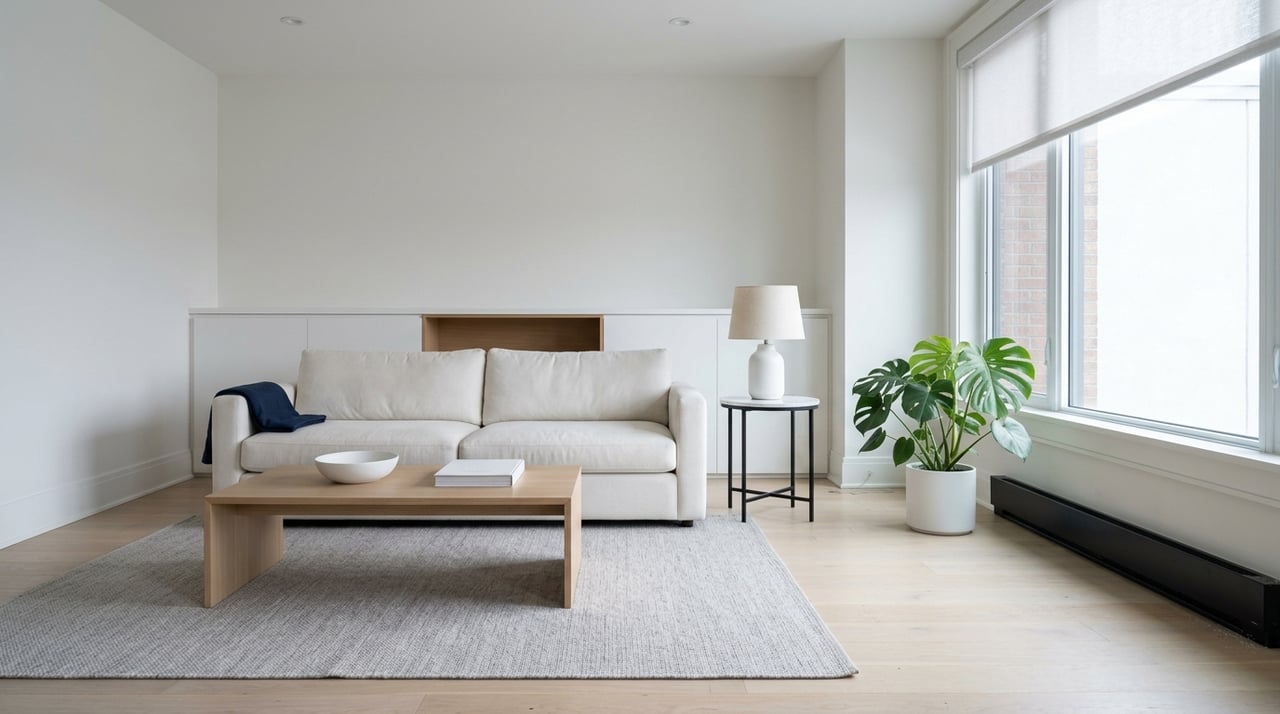
The living room often carries the listing photos and sets the tone for showings. Remove bulky furniture, simplify the layout, and create a clear path through the room so buyers can understand scale quickly.
This is especially important in a highly walkable urban neighborhood where lifestyle and ease of living are part of the appeal. Back Bay has a Walk Score of 97, so buyers may already be imagining how the home connects to daily city life.
Refresh the primary bedroom
A calm bedroom helps buyers see the condo as a retreat from the city. Fresh bedding, a neutral color palette, and a limited number of accessories usually do more than bold styling.
The room should feel restful and roomy, not overly personalized. If you have extra furniture in the space, removing one piece can sometimes make the whole room read better in person and in photos.
Edit the kitchen and dining area
Kitchens and dining areas should feel clean, bright, and functional. Clear the counters, reduce small appliances, and use only a few simple accents so buyers notice workspace, storage, and finishes.
If you have an eat-in area or defined dining space, show it clearly. Buyers want to understand how the condo supports everyday meals, hosting, and work-from-home flexibility.
Start with decluttering and deep cleaning
Before you add styling, subtract distractions. The most common seller prep recommendations are decluttering and cleaning the entire home, and those two steps create the foundation for everything else.
Camera lenses tend to magnify clutter and awkward furniture placement. That means a room that feels "fine" in daily life may look crowded or chaotic in listing photos.
A practical checklist includes:
- Remove excess furniture
- Clear countertops and nightstands
- Put away personal photos and highly specific decor
- Organize shelves so they look intentional, not packed
- Deep clean kitchens and baths
- Wash windows and mirrors
- Open blinds and maximize natural light
Closets matter too. A closet that is about half full tends to show better because it suggests usable storage without feeling cramped.
Use a simple, neutral design plan
In most cases, less is more. Neutral paint tones, clean towels, fresh bedding, and a few well-chosen accessories can help the space feel finished without distracting from the condo itself.
This approach works well in Back Bay because it lets architectural details and natural light take center stage. White, off-white, soft gray, and light natural textures often create a clean backdrop that feels current and broadly appealing.
Try to avoid overfilling the home with decor. A few accents, such as greenery, a tray, or simple artwork, can add warmth while keeping the overall impression crisp and uncluttered.
Stage for photos, not just showings
Today, staging is also a digital marketing strategy. According to NAR, 81% of buyers rate listing photos as the most useful feature in their online home search.
That means photo day is not a separate step from staging. It is one of the most important parts of the process because the online presentation often determines whether buyers book a showing at all.
Prepare for photo day carefully
Your condo should be spotless and fully staged before photography begins. Remove distracting items, double-check surfaces, hide cords, and make sure each room has a clear visual purpose.
A few final touches can help:
- Fluff bedding and pillows
- Add fresh towels in bathrooms
- Straighten dining chairs and barstools
- Turn on lights if needed for balance
- Add a small amount of greenery
- Make sure window coverings are consistent
Back Bay buyers often respond strongly to light, proportion, and room flow. Strong photography should help them notice those qualities right away.
When virtual staging makes sense
If your condo is vacant or partially empty, virtual staging can help buyers understand how a room functions. It can be especially useful for odd layouts, secondary bedrooms, or open living areas where scale is not obvious.
Still, virtual staging should be used carefully. If a photo is materially altered, that change should be disclosed.
A good rule is to use virtual staging to clarify a space, not to misrepresent it. The goal is always to help buyers understand the home's real potential.
Budget for staging realistically
Staging costs can vary based on whether the condo is occupied, vacant, partially staged, or positioned at the luxury end of the market. NAR's 2025 staging report puts the median cost of a professional staging service at $1,500, compared with $500 when the seller's agent handled staging.
Separate cost guidance from 2026 shows average home staging at $1,849, with a typical range of $832 to $2,917. That same guidance estimates about $300 to $700 per staged room per month.
Occupied staging is often estimated around $1,000 to $3,000, while partial staging may run $1,000 to $2,500. Vacant staging can be higher, often around $4,000 to $6,000, and luxury staging may exceed that.
Cleaning, paint, and minor repairs can add to the total, so it helps to build a prep budget early. In many cases, the smartest plan is not to stage every inch of the condo, but to invest in the rooms and updates that most affect buyer perception.
Coordinate staging with your listing timeline
Timing matters almost as much as design. A practical workflow for a Back Bay condo is to declutter and deep clean first, stage the main living areas next, then photograph and launch while the home is still in show-ready condition.
That sequence helps you avoid paying for staging too long before the listing goes live. It also keeps the home consistent across photos, showings, and open houses.
For many sellers, coordination is the hardest part. Managing cleaners, storage help, stagers, photographers, and any touch-up vendors takes time, especially if you are still living in the condo.
Keep local property rules in mind
In Back Bay, exterior changes are a separate issue from staging. If you are thinking about any exterior work in the Back Bay Architectural District, review and approval are required before work begins, so do not treat that as part of your quick staging plan.
For most sellers, the faster path is to focus on interior presentation, lighting, layout, and photography. Those are the updates that can usually move the needle without creating a longer approval process.
You should also check lead-paint notification requirements early if the condo or building was built before 1978. In Massachusetts, lead-paint notification rules apply before a purchase agreement is signed, which is especially relevant in Back Bay's older housing stock.
A smart staging strategy for premium offers
Premium offers rarely come from one trick. They usually come from a series of good decisions that make the condo feel clean, well cared for, easy to understand, and easy to picture living in.
In Back Bay, that means leaning into the neighborhood's character, editing the space carefully, and making sure your online presentation is just as strong as the in-person experience. When you combine thoughtful staging with a data-driven pricing and launch strategy, you give your condo a better chance to stand out.
If you want a clear plan for preparing your Back Bay condo for the market, Prime Realty can help you evaluate staging priorities, timing, and presentation strategy with local insight and a full-service approach.
FAQs
What rooms should you stage first in a Back Bay condo?
- Start with the living room, primary bedroom, and kitchen or dining area, since those spaces most often shape buyer interest and listing photo performance.
How much does condo staging cost in Back Bay?
- Costs vary, but national 2025 to 2026 guidance places average staging around $1,500 to $1,849, with higher totals possible for vacant, partial, or luxury staging.
Does staging really help a Boston condo sell?
- Staging can help buyers visualize the home more easily, and industry research shows it may support higher offers and reduce time on market.
Should you use virtual staging for a vacant Back Bay condo?
- Virtual staging can help buyers understand scale and layout in vacant rooms, but any material photo alteration should be disclosed.
Do exterior updates in Back Bay need approval before listing?
- If the property is in the Back Bay Architectural District, exterior work is subject to review and approval before work begins, so interior staging should be planned separately.
What should you do before staging an older Back Bay condo for sale?
- Declutter, deep clean, and check whether Massachusetts lead-paint notification rules apply if the condo or building was built before 1978.